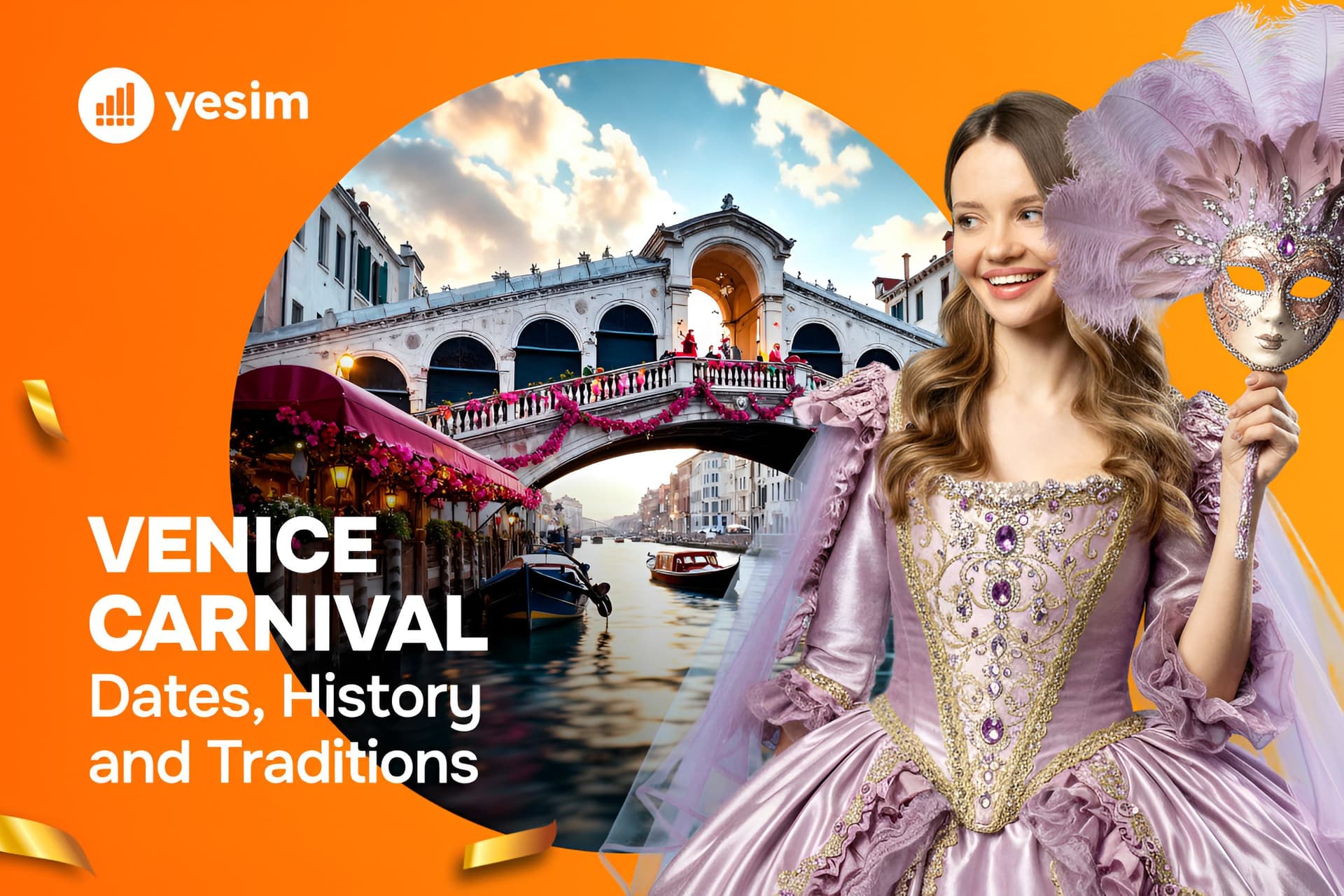
Venice Carnival 2026: Dates, Costumes, Traditions, and What to Expect

Table of contents

- What Is the Venice Carnival?
- Venice Carnival Schedule and Key Events
- Venice in February 2026: Weather and What to Expect
- Venice Carnival History: From the 11th Century to Today
- When Is Venice Carnival?
- Venice Carnival Costumes: What Makes Them Unique
- The Venice Mask Tradition: Types and Meanings
- What Is Venice Carnival Famous For?
- Is Venice Carnival Worth It?
- Venice Carnival Activities: What to Do Beyond Watching
- Best Time to Visit Venice Carnival
- Venice Carnival Travel Tips: Plan Ahead
- Stay Connected During Venice Carnival with Yesim
- Practical Information for Venice Carnival
- Time to Enjoy the Venice Carnival
- Venice Carnival at Night: Masked Balls and Evening Events
Share
Share
Yesim virtual SIM card for travelers
Get a 10% discount for your first purchase with the code
The Venice Carnival returns in 2026 with its centuries-old tradition of masks, costumes, and celebrations along the canals. If you're planning to visit Venice during Carnival, you need the official dates, practical tips, and reliable connectivity. This guide will share all the needed information about Venice Carnival.
When Is Venice Carnival?
Venice Carnival 2026 runs from February 7 to February 24, 2026. The carnival begins on Saturday, February 7, and ends on Shrove Tuesday, February 24, the last day before Lent begins. The dates shift each year because they're tied to Easter, which changes based on the lunar calendar.
The most intense days fall during the final weekend and on Shrove Tuesday itself, when Piazza San Marco fills with costumed participants and crowds peak. If you want to see the carnival at its liveliest, plan for February 21-24.
What Is the Venice Carnival?
The Venice Carnival is a festival rooted in the history of the Republic of Venice. It's known for elaborate masks and costumes that let participants hide their identity, a tradition that once allowed Venetians from different social classes to mingle freely.
Unlike Rio's samba parades or New Orleans' street parties, the Venetian carnival centers on visual spectacle: costumed figures posing for photos in San Marco, masked balls in historic palaces, and parades along the Grand Canal. The masks are the defining symbol. Without them, it's not really the Venice Carnival.
The event draws hundreds of thousands of visitors. Some come for the official Venice Carnival events, like the Festa delle Marie or the Volo dell'Angelo (Flight of the Angel). Others come simply to walk the streets of Venice and see the costumes up close.
Venice Carnival Schedule and Key Events
The official Venice Carnival program includes several signature events:
- Festa delle Marie (Festival of the Marys). Held on the opening weekend, this procession celebrates a legend from the year 1162. Twelve young women dressed in historical costumes parade from San Pietro di Castello to Piazza San Marco, where one is crowned the "Maria of the Year."
- Volo dell'Angelo (Flight of the Angel). On the first Sunday, a performer descends from the Campanile in St. Mark's Square on a zipline, wearing a costume and greeting the crowd below. This event draws massive crowds.
- Carnival Ball Events. Throughout the two weeks, private masked balls take place in Venetian palaces. These require tickets, often priced at €200-€500, and feature live music, banquets, and period dress codes. Attendees wear lavish costumes and bauta masks, recreating the atmosphere of 16th-century Venice.
- Grand Canal Parade. Gondolas and boats decorated in carnival themes float down the Grand Canal, carrying costumed acrobats, musicians, and performers. The parade typically happens midweek.
- Shrove Tuesday Finale. The carnival ends on February 24 with final performances in Piazza San Marco, marking the start of the 40 days of fasting during Lent.
Check the official Carnevale di Venezia website closer to February for the complete Venice Carnival schedule, including times and ticketed events.

Venice in February 2026: Weather and What to Expect
February in Venice is cold and damp. Expect temperatures between 2°C and 10°C (36°F-50°F). Rain is common, and fog rolls in over the canals. Bring waterproof shoes, Venice floods occasionally, especially around San Marco.
The city transforms during Carnival. Piazza San Marco and the areas around the Basilica di San Marco become pedestrian zones packed with visitors. Streets near the Rialto Bridge and along the Grand Canal fill with performers, vendors, and tourists taking Venice Carnival photos.
Hotels and Airbnbs raise prices significantly during these weeks. A room that costs €80 in March might cost €180 in mid-February. Book early if you're planning to visit.
Despite the crowds and cold, Venice during Carnival has a unique atmosphere. The city leans into its history. You'll see people in plague doctor masks walking past Gothic architecture, gondolas gliding under bridges, and costumes that look like they stepped out of a Casanova novel.
Venice Carnival History: From the 11th Century to Today
The first recorded Venice Carnival dates back to 1162, though informal celebrations likely existed earlier. The carnival became an official event under the Republic of Venice and grew into a weeks-long festival where Venetians wore masks, attended masked balls, and celebrated before the period of fasting during Lent.
By the 16th century, the carnival had become famous across Europe. Wealthy travelers came to Venice to attend banquets and parties in palaces along the Grand Canal. The masks allowed a rare social freedom, nobles could mingle with merchants, and everyone could act without judgment.
The tradition continued for centuries until Napoleon conquered Venice in 1797, marking the end of the Republic. He banned the carnival, viewing it as a symbol of Venetian independence. The festival disappeared for nearly 200 years.
Venice revived the carnival in 1979 as a way to attract tourists and celebrate the city's history. The modern version keeps the core elements: masks, costumes, parades, but adds contemporary events like concerts and art exhibitions.
Today, the Venice Carnival is one of the most famous carnival celebrations in the world, drawing visitors from every continent.
Why Is the Carnival of Venice Celebrated?
The carnival originally served as a release before Lent, the 40 days of fasting leading up to Easter. Venetians used this time to feast, dance, and socialize before the religious restrictions began.
But the masks gave it a deeper significance. In a city built on strict social hierarchies, the carnival offered a brief period where everyone could hide their identity. A merchant could dress like a noble. A noble could walk among commoners. The masks created temporary equality.
Venice Carnival Costumes: What Makes Them Unique
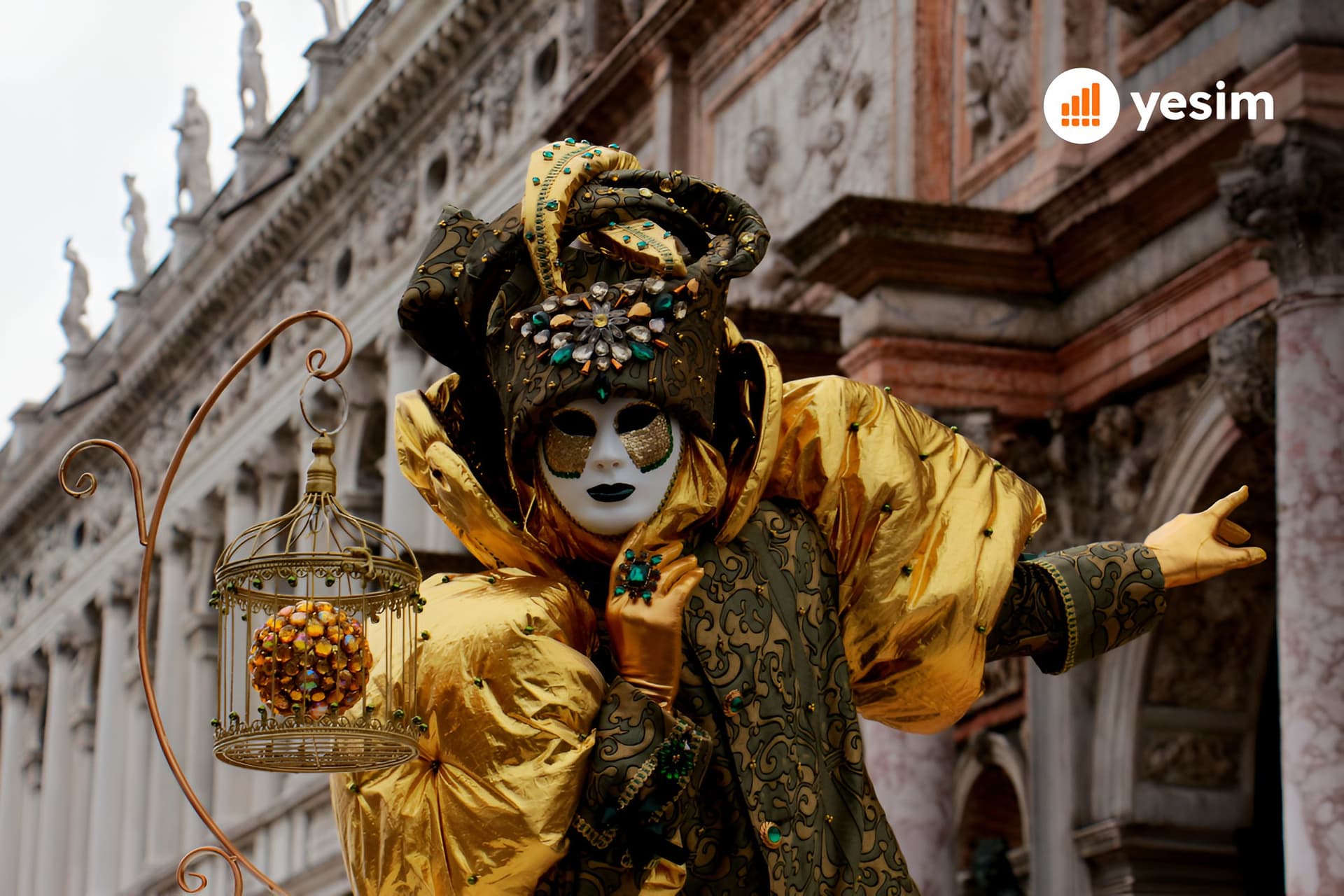
Venice Carnival costumes follow a different tradition than most European festivals. They're not about bright colors or wild dance outfits. They're about elegance, history, and detail.
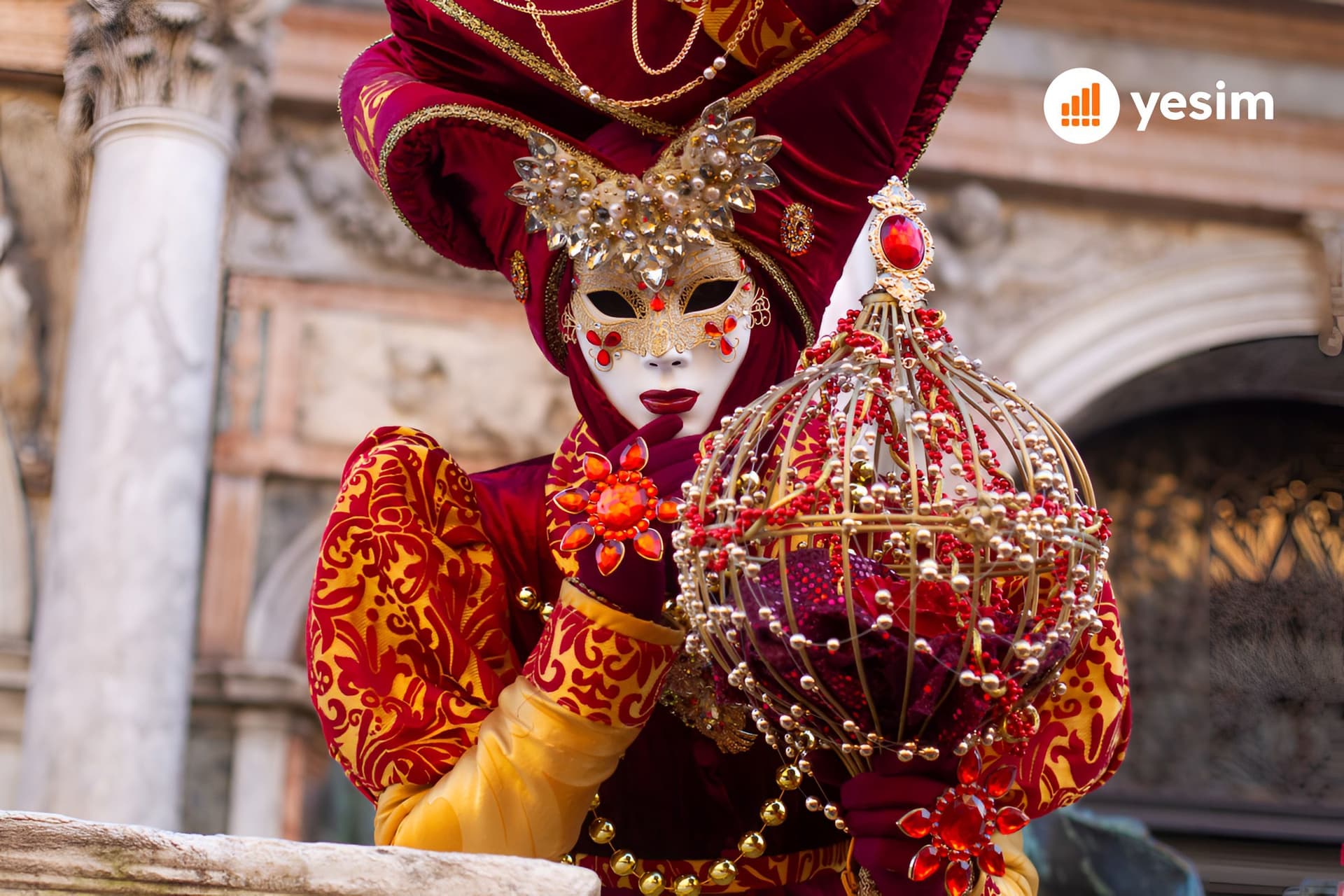
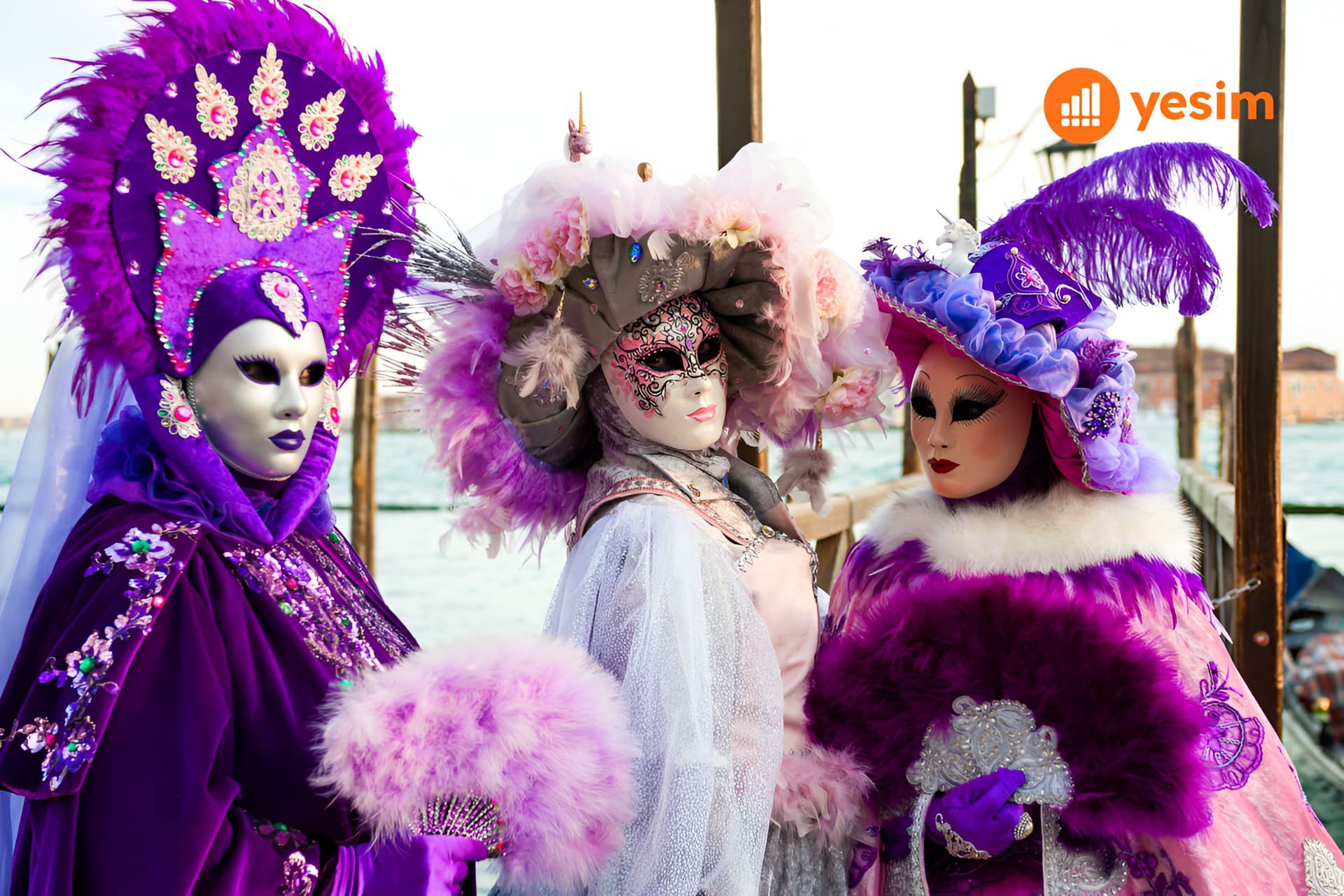
Traditional Venice Carnival costumes are based on 18th-century aristocratic fashion: long capes, tricorn hats, brocade gowns, lace gloves, and layers of fabric. The goal is to look like you belong in a painting from the Republic of Venice.
Many participants rent or buy historical costumes from shops near San Marco. These outfits can cost anywhere from €50 for a simple mask and cape to €2,000+ for a full custom ensemble with hand-sewn details. Venice Carnival outfits typically include:
- A mask (essential)
- A long cloak or cape
- Period-appropriate dress or suit
- Accessories like fans, walking sticks, or feathered hats
Some people wear modern interpretations, creative, colorful, or surreal designs. But the most photographed participants stick to the classic Venetian style.
The Venice Mask Tradition: Types and Meanings
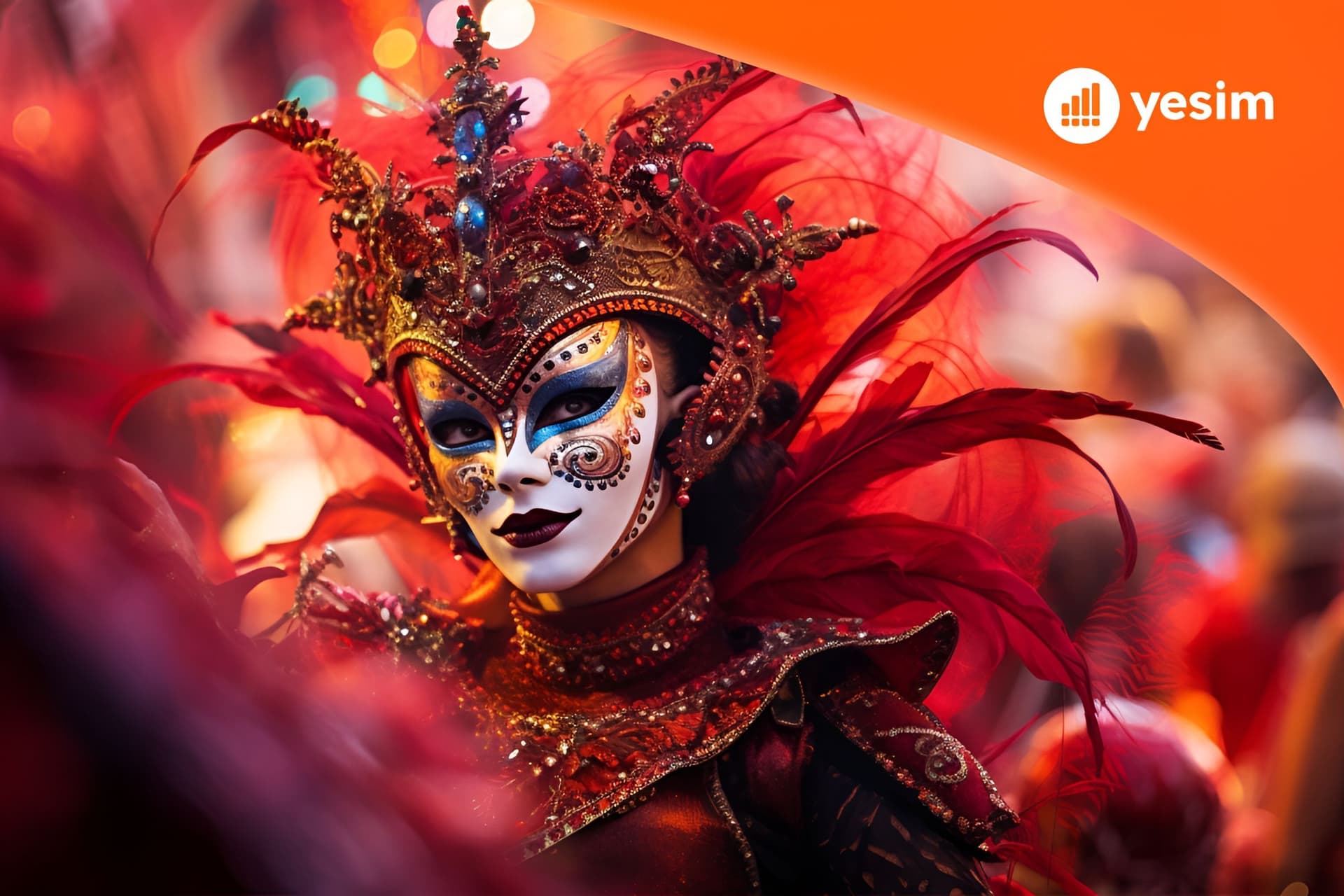
The mask is the core of the carnival. Historically, Venetians wore masks to hide their identity, allowing them to socialize across social class boundaries or engage in activities they wouldn't do openly. The most common types of Venetian masks:
- Bauta. A white mask covering the entire face, worn with a black tricorn hat and cloak. This was the most common mask during the Republic of Venice because it allowed the wearer to eat and drink while keeping their identity hidden.
- Plague Doctor Mask. Recognizable by its long, beak-like nose. Doctors wore these during the plague outbreaks, filling the beak with herbs to filter the air. Today, it's purely symbolic and one of the most popular masks for tourists.
- Colombina. A half-mask covering only the upper face, often decorated with gold, jewels, or feathers. Named after a character in Commedia dell'arte.
- Moretta. A black oval mask traditionally worn by women. It had no straps, wearers held it in place by biting on a button on the inside.
- Volto. A simple white mask covering the full face, often paired with elaborate costumes. This is the standard "Venetian mask" you see in photos.
Masks are sold throughout Venice during Carnival, but quality varies. Cheap plastic versions cost €5-€10 in tourist shops. Hand-painted ceramic or leather masks from artisan workshops can cost €100-€500.
Venice Carnival at Night: Masked Balls and Evening Events
The carnival changes after dark. Piazza San Marco empties slightly, and the focus shifts to private events inside Venetian palaces.
Masked balls are the highlight of Venice Carnival at night. These are ticketed events, usually held in historic buildings like Ca' Vendramin Calergi or Palazzo Pisani Moretta. Attendees wear elaborate masks and historical costumes. The events include multi-course dinners, live orchestras, and dancing that lasts until 2 or 3 AM.
Tickets start around €200 and can exceed €500 for exclusive balls. Some events require specific dress codes – "18th-century Venetian attire" or "black-tie with mask." If you plan to attend, book tickets months in advance.
For those not attending a ball, walking through Venice at night during Carnival still offers something unique. The streets near San Marco and along the canals are quieter but still filled with costumed figures. The lighting on the Basilica and across the lagoon creates a surreal backdrop.
What Is Venice Carnival Famous For?
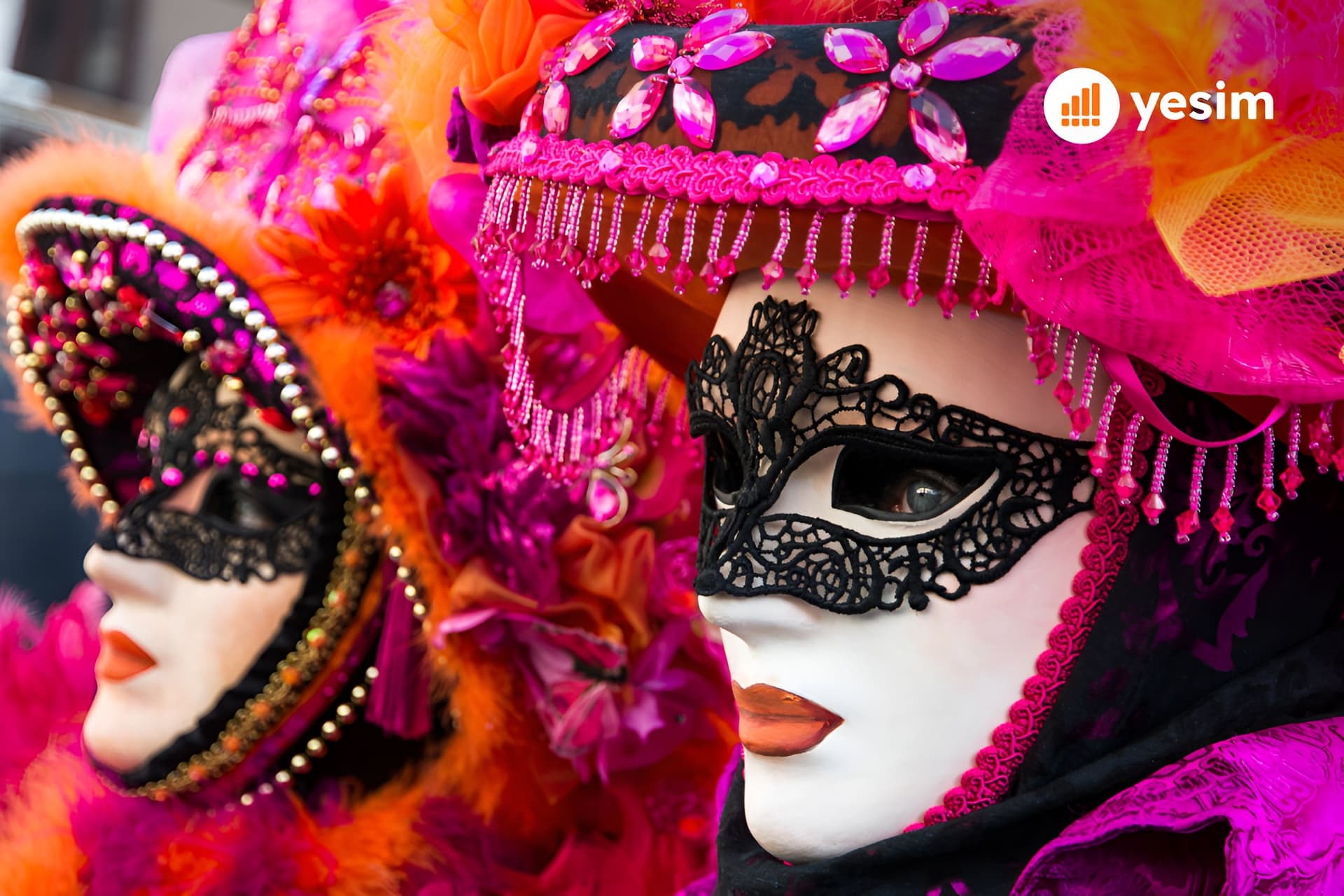
The Carnival in Venice is famous for three things:
- The masks and costumes. No other carnival in the world has this level of historical detail in its dress. Participants often spend months preparing their outfits.
- The setting. Venice itself is the stage. The canals, bridges, and architecture turn the entire city into a living museum during Carnival.
- The atmosphere. Unlike festivals focused on music or dancing, the Venice Carnival is about spectacle and visual storytelling. People come to see and be seen.
This combination makes it one of the most photographed events in Europe. Every year, millions of Venice Carnival photos flood social media, keeping the tradition visible worldwide.
Is Venice Carnival Worth It?
That depends on what you're looking for.
You should go if:
- You want to see Venice at its most theatrical
- You're interested in historical costumes and mask traditions
- You're willing to deal with crowds for a unique experience
- You enjoy photography or people-watching
- You're planning a trip to Italy in February anyway
You might skip it if:
- You dislike large crowds
- You prefer active festivals (music, dancing, street parties)
- You're on a tight budget (prices spike during Carnival)
- You want to see Venice's art and museums without the chaos
The Venice Carnival is not a party in the traditional sense. It's slower, more visual, and focused on appearance. If that sounds appealing, it's absolutely worth experiencing at least once.
Venice Carnival Activities: What to Do Beyond Watching
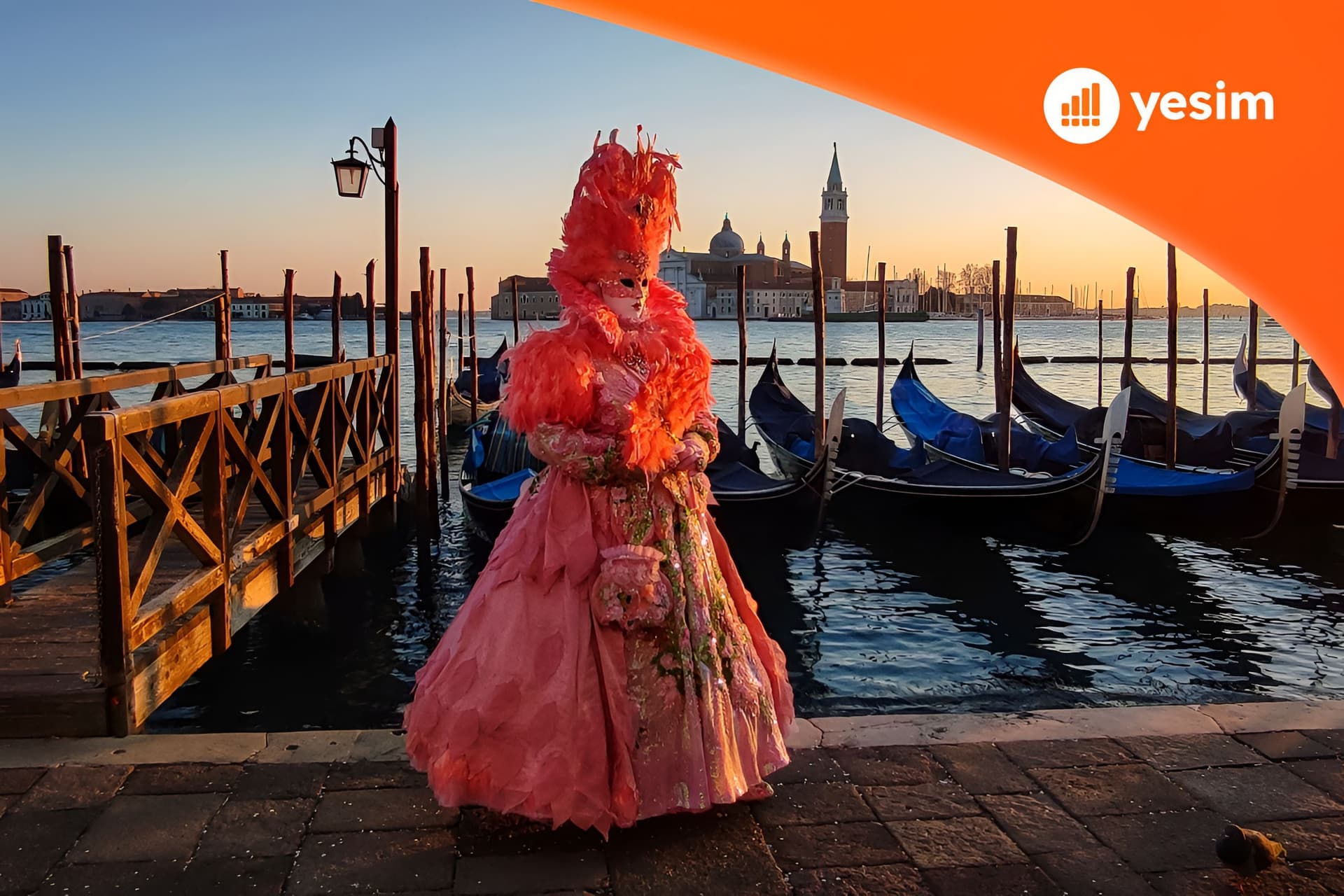
Most visitors spend their time watching costumed participants in Piazza San Marco and along the Grand Canal. But there are other ways to experience the carnival:
- Rent a costume. Several shops near San Marco rent full historical costumes for €50-€150 per day. Wearing a costume changes how you experience the event, you become part of the spectacle.
- Attend a mask-making workshop. Artisan workshops around Venice offer classes where you can paint and decorate your own Venetian mask. Prices range from €30-€80.
- Take a gondola ride. The canals are busier during Carnival, but a gondola ride still offers a unique view of the costumes from the water.
- Visit smaller events. While Piazza San Marco gets the most attention, smaller neighborhoods host their own Venice Carnival events, including performances and parades that are less crowdedExplore the history of Venetian masks. The Museo di Palazzo Mocenigo has exhibits on Venetian textiles, perfumes, and costume history, including masks used during the carnival centuries ago.
Best Time to Visit Venice Carnival
If you want the full experience with maximum crowds and energy, visit during the final weekend and Shrove Tuesday (February 21-24, 2026).
If you prefer a calmer visit with fewer tourists but still want to see costumes and events, come during the first week (February 7-13).
Weekdays between February 10-20 offer a balance, you'll see plenty of costumed participants, experience the Venetian carnival atmosphere, and avoid the worst of the crowds.
Venice Carnival Travel Tips: Plan Ahead
Hotels in Venice fill up fast during Carnival, and prices double. Reserve your room at least three months in advance.
- Arrive before the crowds. The first weekend (February 7-8) is busy but manageable. The final weekend and Shrove Tuesday (February 21-24) are packed. If you want to experience the carnival without feeling overwhelmed, visit during the weekdays between February 10-20.
- Bring layers and waterproof gear. February in Venice is cold and wet. Wear comfortable, waterproof shoes. If you're planning to wear a costume, prepare for the weather, long cloaks help.
- Stay connected with reliable data. Venice during Carnival means navigating crowds, finding events, booking last-minute tickets, and sharing photos in real time. You'll need fast, reliable mobile data.
Most travelers rely on expensive roaming charges or juggle multiple local SIM cards when visiting multiple countries in Europe. That's where Yesim changes the game.
🇮🇹 Read also: Prepaid SIM Card for Italy
Stay Connected During Venice Carnival with Yesim
When you're moving through crowded streets in Venice, trying to find the next carnival event, or sharing photos of plague doctor masks and gondolas on the Grand Canal, you need data that works without interruption.
Yesim offers an International eSIM (Pay As You Go) that works in over 200 countries, including Italy. One plan, one eSIM, one app. You top up once and use it across Europe, no need to install a new eSIM every time you cross a border. Why eSIM for Italy from Yesim works better for travelers:
- One global plan. Unlike competitors that force you to buy a new eSIM for each country, Yesim's international plan covers Italy, France, Switzerland, and 200+ other destinations. If you're visiting Venice for Carnival and then traveling to Florence or Milan, your data keeps working.
- No cluttered SIM stack. Other providers make you install multiple eSIMs, filling up your phone's storage and making it hard to track which plan you're using. With Yesim, one eSIM, one name in your settings. You always know where your data is coming from.
- Competitive pricing. Data plans start at €0,80. Large bundles are often cheaper than Airalo and other competitors, especially for multi-country trips.
- Virtual numbers. Need a local number for booking restaurants or hotels? Yesim offers virtual numbers in multiple countries, something most eSIM providers don't offer at all.
Since launching in 2019, Yesim has connected thousands of travelers to top-tier local networks with secure, high-speed data. No hidden fees, no surprise charges, no roaming bills.
You'll have reliable connectivity from the moment you arrive at Marco Polo Airport to the last night of Carnival in Piazza San Marco.
Practical Information for Venice Carnival
Most international visitors fly into Venice Marco Polo Airport (VCE). From there, take the Alilaguna water bus (€15, 60-90 minutes) or a water taxi (€110-€150, 30 minutes) to reach central Venice. You can also fly into nearby airports like Treviso (TSF) or Verona (VRN) and take a bus or train to Venice.
- Getting around Venice. Venice has no cars. You'll walk or take vaporetto (water buses). A 72-hour vaporetto pass costs around €40 and covers unlimited rides on most routes. During Carnival, expect delays on the vaporetto lines closest to San Marco. Walking is often faster.
- Where to stay. Hotels near Piazza San Marco are the most expensive but put you in the center of the carnival action. For cheaper options, stay in Cannaregio or Dorsoduro and take the vaporetto to San Marco.
- Food during Carnival. Restaurants near San Marco raise prices during Carnival. For better value, eat in neighborhoods like Castello or Santa Croce. Try traditional Venetian dishes like sarde in saor (sweet and sour sardines) or risi e bisi (rice and peas).
Street food stalls near the carnival sell frittelle (fried dough balls) and galani (crispy pastries dusted with sugar), both traditional Carnival treats.
Time to Enjoy the Venice Carnival
The Venice Carnival is a living tradition that connects modern visitors to centuries of Venetian history.
Experience the Venice Carnival 2026 with the confidence that your connectivity won't fail. Download Yesim and stay connected across Italy, Europe, and beyond.
Share
Share
FAQ
Can I participate in the Venice Carnival without a costume?
Yes, absolutely. Most visitors attend the Venice Carnival without wearing a costume. You can walk through Piazza San Marco, watch the parades, attend free outdoor events, and take photos of costumed participants without dressing up yourself. However, if you want to attend a private masked ball in one of the Venetian palaces, costumes are mandatory, these events have strict dress codes requiring period-appropriate attire and masks.
Are there free Venice Carnival events, or do I need to buy tickets for everything?
Most Venice Carnival events are completely free. The Festa delle Marie parade, the Volo dell'Angelo (Flight of the Angel), street performances, the Grand Canal parade, and all the costumed participants posing around Piazza San Marco cost nothing to watch. You simply show up and enjoy. The only events requiring tickets are the private masked balls in historic palaces (€200-€500+), some theatrical performances, and certain VIP seating areas for major events.
Is Venice Carnival family-friendly, or is it mainly for adults?
Venice Carnival works for families, though it's not specifically designed for children the way some festivals are. There are no loud music stages, wild street parties, or adult-only content in public areas. Kids often enjoy seeing the elaborate costumes, masks, and street performers. However, the crowds can be overwhelming for small children, especially near Piazza San Marco on peak days.
Recommended eSIMs

Pay & Fly
Unlimited data. Pay as you go
Europe & UK eSIM
33 countries
Balkans eSIM
11 countries

France eSIM
from $1.88 / day

Germany eSIM
from $1.88 / day

United Kingdom eSIM
from $1.88 / day

Italy eSIM
from $1.88 / day

Netherlands eSIM
from $1.72 / day

Denmark eSIM
from $1.72 / day

Finland eSIM
from $1.72 / day
Spain eSIM
from $1.88 / day

Greece eSIM
from $1.72 / day
Croatia eSIM
from $1.72 / day
Portugal eSIM
from $1.72 / day

Czech Republic eSIM
from $1.72 / day

Slovenia eSIM
from $1.72 / day

Romania eSIM
from $1.72 / day