
Airhub eSIM Review: Is It Worth It in 2026

Table of contents

Share
Share
Yesim virtual SIM card for travelers
Get a 10% discount for your first purchase with the code
Search "airhub esim review" on Google and you'll notice something unusual before you click a single result: two of the top Reddit threads are titled "Stay away from Airhub eSIM" and "Avoid Airhub eSIM." That's not a great sign for a service trying to earn your trust and your travel budget. It also tells you something important, the people who had problems were vocal enough to push those threads to the front page of results.
This review covers both sides without softening either. Plans, pricing, the free trial, what the app actually feels like to use, and the honest picture of what users say when something goes wrong.
What is Airhub eSIM?
Airhub launched around 2020 with a positioning that's become crowded: affordable travel eSIM, no physical card, works in lots of countries, available through an app. What it's done slightly differently from the start is offer a free 200 MB trial that any new user can claim for a destination before spending a cent. In a market where most providers ask you to pay first and troubleshoot later, that's a meaningful distinction.
The service is data-only on standard plans: no voice calls, no SMS. Your home SIM stays in the phone handling calls and messages while Airhub handles the mobile data side. Coverage reaches 190+ countries through wholesale roaming deals with local carriers.
Who actually gets the most from it: travellers taking occasional international trips who want to test the service cheaply before committing to a bigger plan, and anyone heading to destinations in Eastern Europe or parts of Asia where Airhub's per-GB pricing tends to undercut the bigger names. Digital nomads relying on a single eSIM as their primary work connection should look elsewhere, the support situation, covered below, creates meaningful risk for anyone who can't afford to be offline for 24–48 hours.
How to set up Airhub eSIM
The setup is a standard eSIM process, worth doing at home before you travel rather than at the airport where slow Wi-Fi and time pressure make errors more likely.
- Download the Airhub app from the App Store or Google Play, or work through the website. Registration requires only an email, no payment details upfront, which is a low-friction start. New users get the 200 MB free trial immediately: claim it for your destination, let it install, and confirm your phone connects to a local network before buying anything. This step alone sets Airhub apart from most competitors.
- Once you've decided to purchase, select a plan by country or region, pay, and the QR code appears in the app and arrives by email. On iPhone, go to Settings → Cellular → Add eSIM and scan it. On Android, Settings → Network & Internet → SIMs → Add eSIM. The profile loads in roughly 30–60 seconds. Set the Airhub eSIM as your active data line, confirm data roaming is enabled on that profile specifically, a separate toggle from the installation and you're ready.
Two things worth noting: the QR code is single-use, so install it on the right device the first time. And Airhub supports automatic installation (no QR needed) on compatible devices and iOS versions — the app shows this option during setup if your hardware supports it, which is a slightly smoother experience when it's available.
Device compatibility follows the standard eSIM hardware requirement: iPhones from the XS (2018) onward, most Android flagships from 2020 onward. If you're uncertain about your specific model, check the Yesim compatible devices list as a comprehensive reference.
Airhub eSIM coverage and availability
Airhub's 190+ country footprint is real, and it covers ground that some mid-tier competitors don't. Western Europe is fully covered; so is Eastern Europe including less-visited markets like Bosnia, Kosovo, and Albania where prices tend to be significantly lower than the flagship providers charge. Asia coverage spans Japan, South Korea, Thailand, Indonesia, Vietnam, India, and others. The Americas reach the USA, Canada, Brazil, Mexico, and Colombia, among others.
Where coverage gets patchy is the Middle East and Africa, availability varies significantly by country, and plan quality in those regions isn't as consistent as in Europe or East Asia. If Africa or the Middle East is your destination, verify the specific country plan details before committing.
Plan types span single-country, regional (Europe, Balkans, Asia, Americas), and global. 5G is available in select destinations where the local partner carrier supports it, so check the specific listing for your destination rather than assuming. In practice, 4G LTE is what most Airhub customers get, which is adequate for any standard travel use.

Airhub pricing and data plans
Pricing is one of Airhub's genuine strengths in certain markets. The Bosnia example below shows what the value can look like at the affordable end of the spectrum.
| Data | Validity | Price | Per GB |
| 1 GB | 7 days | $2.50 | $2.50/GB |
| 4 GB | 30 days | $6.00 | $1.50/GB |
| 7 GB | 30 days | $9.00 | $1.29/GB |
| 12 GB | 30 days | $15.50 | $1.29/GB |
| 20 GB | 30 days | $23.00 | $1.15/GB |
USA plan pricing
| Data | Validity | Price | Per GB |
| 1 GB | 7 days | ~$4 | ~$4/GB |
| 5 GB | 30 days | ~$13 | ~$2.60/GB |
| 10 GB | 30 days | ~$22 | ~$2.20/GB |
| 20 GB | 30 days | ~$37 | ~$1.85/GB |
Prices change periodically, verify current rates on airhubapp.com before purchasing.
Two structural limitations matter here. Airhub has no unlimited data plans: every plan has a hard GB cap. And when that cap is hit, data stops entirely rather than throttling to a slower speed. There's no warning, no grace period, no "you have 500 MB left" notification that forces a decision. Your connection cuts off. If you're mid-navigation in a city you don't know, that's a real problem.
The answer is buying more data than you expect to use, or keeping a Wi-Fi backup in reach, which isn't always possible. There are also no no-expiry options. Unused data disappears when the validity window closes. If you buy a 30-day plan and only use half before your trip ends, the remainder is gone.
Airhub app and user experience
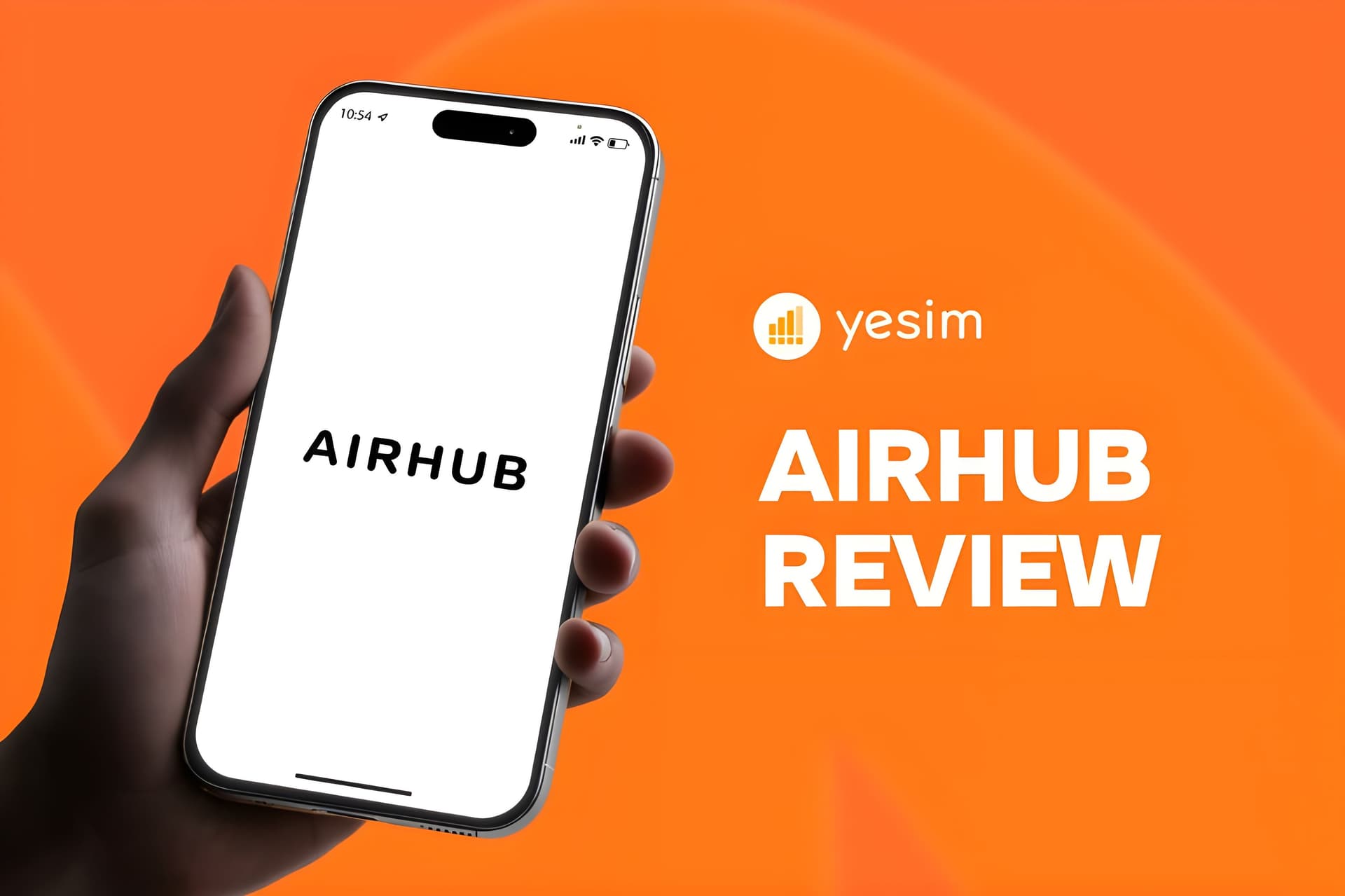
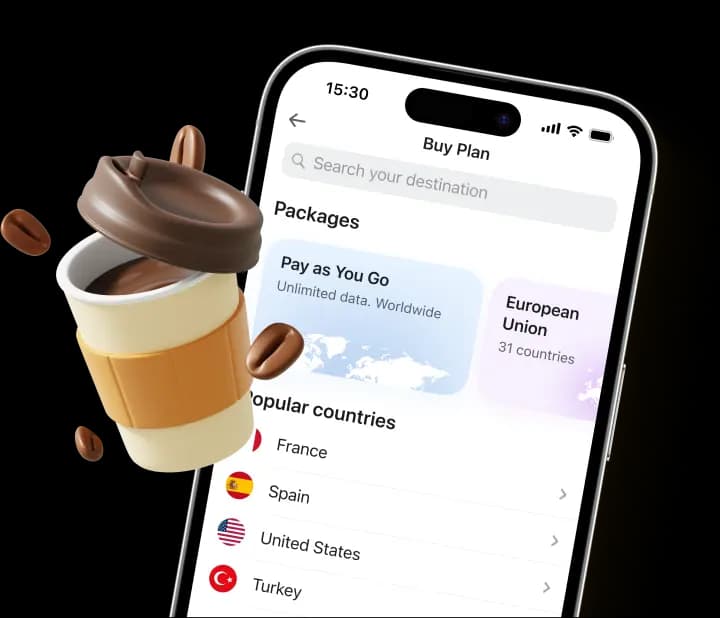
The app is better than its age suggests. The interface is clean enough, country search is fast, and plan selection doesn't require navigating through confusing overlapping tiers. The dashboard shows remaining data and expiry clearly, you always know where you stand.
What it lacks is in-app live chat. If something goes wrong, your path to help is email. There's no immediately visible support button that opens a conversation; you send a message and wait. Some users find this during setup at home and it's fine. Others discover it after landing in a foreign city with a non-functioning eSIM, which is a different experience.
App ratings sit around 4.0–4.3 on both stores. The positive reviews consistently mention easy activation and good pricing. The critical ones cluster around support response times, with occasional mentions of the app logging users out unexpectedly.
What users actually say about Airhub
The SERP pattern is worth examining plainly. When you search "airhub esim review," Reddit threads warning against the service appear alongside the Trustpilot listing at position 1. The existence of those threads isn't the whole story, they represent a segment of users, not the majority, but the search volume around "airhub esim support email" (100+ monthly searches) and "support@airhubapp.com" (30+ monthly searches) tells you that a meaningful number of customers end up searching for a way to reach the company rather than finding support naturally through the product.
The complaint pattern is specific. It's not about coverage being misrepresented or pricing being deceptive. It's about activation failures: eSIM profiles that install but fail to connect and the subsequent experience of emailing support and waiting 24 to 72 hours for a response while being abroad without data. That's a scenario where even a small failure rate has a disproportionate real-world impact on travellers.
The Trustpilot picture is more balanced. Most reviews there are positive, with users praising the setup process and pricing. You can check the current rating at, ratings fluctuate as new reviews come in and it's worth checking before you buy.
Pros and cons of Airhub eSIM
Airhub gets a lot right for travelers who mainly care about affordable data and broad country coverage. The free 200 MB trial is genuinely useful because you can test the service before spending money, something most eSIM providers still don’t offer. It also performs especially well in Eastern Europe and several Asian destinations where prices are often lower than bigger competitors.
| Factor | Airhub | Verdict |
| Free trial | 200 MB across multiple destinations | Best risk-reduction feature in the market |
| Country coverage | 190+ countries including uncommon destinations | Broad — Eastern Europe coverage is a standout |
| Pricing | Competitive in select markets | Strong in Eastern Europe and parts of Asia |
| App quality | Clean interface, clear data tracking | Functional and above average for its tier |
| Auto-install | Available on compatible devices | Removes QR friction where supported |
| 5G support | Select destinations only | Verify per plan |
| Unlimited data | Not offered | Gap vs Yesim and Holafly |
| Data cutoff behaviour | Hard stop at cap, no throttle | Abrupt — no warning before connection drops |
| Customer support | Email only, not 24/7 | 24–72 hour delays documented in user reports |
| No-expiry data | Not offered | Unused data disappears at plan end |
| Voice / SMS | Not included | Standard limitation — home SIM handles calls |
How Airhub compares to other eSIM providers
Airhub's free trial is the one feature in this table that no direct competitor matches across multiple destinations. Airalo's free 1 GB offer exists but only for US plans and first-time users. Airhub's trial applies internationally, which is a different kind of value, it turns "will this work where I'm going" from an $8–$25 gamble into a free test.
Where the comparison tilts against Airhub is on the two dimensions that matter most for anything beyond a short leisure trip: unlimited data and support responsiveness. Both of those gaps are real and neither is closing anytime soon based on what's publicly visible about the product.
| Provider | Free trial | Unlimited data | Hotspot | 24/7 support | Starting price | Best for |
| Airhub | 200 MB | No | Most plans | No | $2.50/1 GB | Budget trips, first-time eSIM users |
| Yesim | No | Yes | All plans | Yes | $0.54/500 MB | Frequent travellers, nomads, heavy users |
| Airalo | 1 GB (US only) | USA only | Yes | Yes | $4.50/1 GB | Wide catalog, recognised brand |
| Holafly | No | All plans | 500 MB/day cap | Yes | $6.90/day | Unlimited-only users |
| Saily | No | Select plans | Yes | Yes | $3.79/1 GB | Budget with NordVPN security |
| Roamless | No | No | Yes | Chat only | $3.95/1 GB (no expiry) | Repeat travellers, flexible validity |
Is Airhub eSIM worth it?
Answering this honestly requires separating two types of traveller. If you're taking a short holiday and you have hotel Wi-Fi as a fallback, Airhub is a reasonable choice. Claim the free trial to confirm coverage, buy a plan that gives you more data than you expect to use, and the odds are good you'll have a perfectly fine experience. The pricing in those markets is genuinely competitive, the app does what it needs to, and the majority of Airhub customers don't encounter the support problems that make headlines on Reddit.
If you're a digital nomad treating your eSIM as a work dependency, taking a solo trip through remote areas, or travelling somewhere the Wi-Fi backup is unreliable, the risk calculus shifts. Support that might take 72 hours to respond isn't a minor inconvenience in those contexts. It's a genuine operational problem. The same applies to any trip where connectivity is time-sensitive: business travel, family emergencies, anything where "wait for an email reply" isn't an acceptable timeline.
Yes, if:
- You want to test coverage before committing, the free 200 MB trial is the best risk-reduction tool in the market.
- Your destination has competitive Airhub pricing (Eastern Europe in particular).
- You use 10 GB or less for the trip and have Wi-Fi backup available.
- You're comfortable with email-only support and understand the response time risk.
No, if:
- You need unlimited data, Yesim and Holafly both offer it; Airhub doesn't.
- Support responsiveness matters: email with 24–72 hour delays is a real documented risk.
- You're a nomad or remote worker for whom downtime has a cost
- dget is tight: Saily and Jetpac price similarly with better support infrastructure.
- You want data that doesn't expire, Roamless is the right product for that.
The free trial is what keeps this rating from being lower. It's a genuinely useful feature that other providers haven't matched, and it addresses the primary anxiety of first-time eSIM buyers. The pricing in select markets is also real value, not just marketing. What pulls the score down is the support situation, because when something goes wrong the recovery path is slower and harder than it should be for a product people depend on while travelling.
Share
Share
FAQ
Is Airhub eSIM legitimate?
Airhub is a real eSIM provider that processes payments, delivers eSIM profiles, and connects to local carrier networks in 190+ countries. The concerns surfaced in public reviews are about support responsiveness when activation issues occur. The free 200 MB trial is the best way to verify the service works on your device before spending anything.
How do I contact Airhub customer support?
The primary support channel is email at support@airhubapp.com, reachable through the app and website. There is no 24/7 live chat. Response times based on user reports range from same-day to 72 hours. If you have a setup question or activation issue, reach out before you travel — getting a reply takes less time from home than from an arrivals hall.
Does Airhub support hotspot tethering?
Hotspot is included on most plans. Check the specific country plan listing on airhubapp.com before purchasing — the feature list for each plan indicates whether tethering is available.
What happens when I run out of Airhub data?
The connection cuts off entirely — no throttle to a reduced speed and no grace period. To restore data access, purchase a new plan through the app. Since completing the purchase requires an internet connection, make sure you have Wi-Fi available when you're close to the cap rather than relying on mobile data to top up.
How does Airhub compare to Yesim for longer trips?
The main differences: Yesim offers unlimited data plans for most major destinations with hotspot included on every plan; Airhub has no unlimited option. Yesim provides 24/7 live chat support; Airhub is email-only with variable response times. Airhub's free 200 MB trial gives you a coverage test that Yesim doesn't offer. For short trips in markets where Airhub's per-GB pricing is strong, it's competitive. For trips over a week, heavy data users, or anyone who needs responsive support, the Yesim offering is more complete. Full comparison at yesim.tech.
Recommended eSIMs

Pay & Fly
Unlimited data. Pay as you go
North America eSIM
3 countries

United States eSIM
from $1.36 / day

Canada eSIM
from $2.36 / day

Mexico eSIM
from $2.76 / day

Dominican Republic eSIM
from $6.80 / day

Jamaica eSIM
from $3.36 / day

Puerto Rico eSIM
from $2.20 / day

Turks & Caicos Islands eSIM
from $7.12 / day

Bermuda eSIM
from $6.60 / GB

Bahamas eSIM
from $6.80 / day

Saint Lucia eSIM
from $6.32 / day